
How to Verify Your University's DEB ID for a Valid Online Degree in India
In today's rapidly evolving educational landscape, online and distance learning programs have become increasingly popular, offering flexibility and accessibility to millions of aspiring students across India. However, with this growth comes the critical need to ensure the validity and recognition of such degrees. A key indicator of a legitimate online or distance education program in India is its approval by the University Grants Commission's Distance Education Bureau (UGC-DEB).
At Parahi.in, India's leading AI-powered career counseling and online education platform, we understand the importance of making informed decisions about your academic future. This in-depth guide will walk you through the essential process of verifying your university's DEB ID, safeguarding your investment in education, and ensuring your degree holds its true value in the professional world.
Understanding UGC-DEB and Its Role in Online Education
The University Grants Commission (UGC) is the statutory body responsible for maintaining standards of higher education in India. The Distance Education Bureau (DEB) is a bureau within the UGC specifically tasked with regulating and overseeing distance and online learning programs offered by Indian universities. Its primary role is to ensure quality, maintain academic standards, and protect students from institutions offering unrecognized or substandard courses.
Any university in India that intends to offer online or distance learning programs, be it undergraduate like an Online BBA or postgraduate like an Online MBA, must seek and obtain recognition from the UGC-DEB. This recognition is not a one-time affair; it is periodically reviewed and renewed. A university's DEB ID, therefore, acts as a stamp of approval, signifying that its distance and online programs meet the prescribed academic and infrastructural standards set by the apex regulatory body.
Pursuing a degree from a UGC-DEB approved institution ensures several critical advantages:
- Legal Validity: Your degree will be recognized by employers, other educational institutions for further studies, and government bodies for competitive examinations.
- Quality Assurance: The curriculum, faculty, and learning infrastructure adhere to national standards.
- Credibility: Enhances the value of your academic qualification on your resume and in your career progression.
- Protection from Fraud: Safeguards you from falling prey to unapproved or fake online degree providers.
Without DEB approval, your degree, regardless of the effort and money you put into it, might be considered invalid or unrecognized, severely impacting your career prospects and eligibility for further education. It's crucial for students to verify this approval status proactively rather than finding out later that their hard-earned qualification lacks official recognition. This is especially true for specialized programs such as an MBA in Hospital and Healthcare Management or a MCA with specialization in Financial Technology and AI, where industry recognition is paramount.

Step-by-Step Guide: How to Verify Your University's DEB ID
Verifying a university's UGC-DEB approval is a straightforward process, but it requires careful attention to detail. Follow these steps to ensure your chosen institution is fully recognized:
1. Access the Official UGC-DEB Website
The first and most reliable source of information is the official UGC-DEB website. Be cautious of third-party websites claiming to list approved universities, as this information can quickly become outdated. Always refer to the primary source.
2. Navigate to the "Institutions & Recognition" Section
On the UGC-DEB portal, look for sections like "Recognised ODL Institutions," "List of HEIs for ODL Programmes," or "Status of Recognition." The specific navigation might change slightly over time, but the core objective is to find the official list of universities approved to offer distance and online programs.
3. Search for Your University
Most UGC-DEB lists are organized state-wise or alphabetically. You can either browse through the list or use a search function if available, to find your desired university. For example, if you are considering Amity University Online, you will search for its name in the respective lists.
4. Check for Specific Program Recognition
It's vital to remember that DEB recognition is not always blanket approval for all programs. A university might be approved to offer certain online degrees (e.g., Online BCA, Online MCA) but not others. Therefore, once you locate your university, thoroughly check if the specific program or specialization you are interested in (e.g., BCA with Specialization in Data Science or MBA with Dual Specialization) is also explicitly listed as approved for online/distance mode.
5. Note the Period of Recognition
UGC-DEB recognition is often granted for a specific period (e.g., for batch admission from 2023-24 to 2025-26). Ensure that the period of recognition covers your admission and study duration. If your program falls outside this specified period, its validity might be questionable.
6. Look for the DEB ID or Reference Number
While the term "DEB ID" is commonly used, you might find reference numbers, file numbers, or specific recognition letters against each university and program. This acts as the unique identifier for their approval. Keep a record of this information.
7. Download the Official Notification (if available)
Some universities and their approvals are accompanied by official Public Notices or recognition letters. Downloading these documents provides concrete proof of recognition and can be useful for your records.
Example Check: Amity University Online
Let's consider Amity University Online. You would navigate to the UGC-DEB website, find the list of recognized institutions, and then locate Amity University. Within Amity's entry, you would then verify if specific programs like the Bachelor of Business Administration (BBA) (Fee ₹3,200, Duration: 36 months) or the Master of Computer Applications (MCA) (Fee ₹3,600, Duration: 24 months) are officially approved for online delivery for your admission year. This meticulous approach prevents future complications.
UGC Approved Universities List: Always cross-reference with our curated list on Parahi.in for an additional layer of verification and easy access to university information.
💡 Pro Tip
When checking for integrated programs like the BBA + MBA Degree Program, ensure the entire integrated structure is approved, not just individual components. Always download the official UGC-DEB recognition letter for your records.
Pro Tip: When checking for integrated programs like the BBA + MBA Degree Program (Duration: 54 months) or B.Com + MBA Degree Program (Duration: 54 months), ensure the entire integrated structure is approved, not just individual components.
Why DEB Verification is Non-Negotiable for Your Career
In the highly competitive Indian job market, a valid and recognized degree is your passport to opportunity. Employers and recruitment agencies increasingly rely on official accreditations to filter candidates. An unrecognized online degree, even from a reputable-sounding institution, can lead to significant setbacks:
1. Employment Challenges
- Job Rejection: Many companies, especially government organizations and larger corporates, have strict policies about recognized degrees. Your application might be rejected outright if your degree isn't from a UGC-DEB approved institution.
- Loss of Credibility: During background checks, an unrecognized degree can raise red flags, impacting your professional reputation.
- Limited Growth: Even if you secure a job, lack of recognition might hinder promotions or eligibility for higher-level positions requiring specific qualifications.
2. Barriers to Further Education
If you plan to pursue higher education, such as an M.Phil or Ph.D., an invalid online degree will prevent you from enrolling in recognized universities. Institutions typically require your previous degrees to be from UGC-approved bodies.
3. Government Job Eligibility
For those aspiring to careers in the public sector, the validity of a degree is paramount. Organizations like UPSC, SSC, and state Public Service Commissions strictly adhere to UGC guidelines. For instance, questions like "Is Online B.Com from IGNOU Valid for Govt Jobs?" frequently arise, emphasizing the importance of DEB approval.
4. Visa and International Recognition
If you have ambitions to work or study abroad, an Indian online degree needs to be recognized by both Indian authorities (UGC-DEB) and potentially international credential evaluation services. A strong foundation of DEB approval makes this process smoother.
Importance of DEB Accreditation for Career Growth
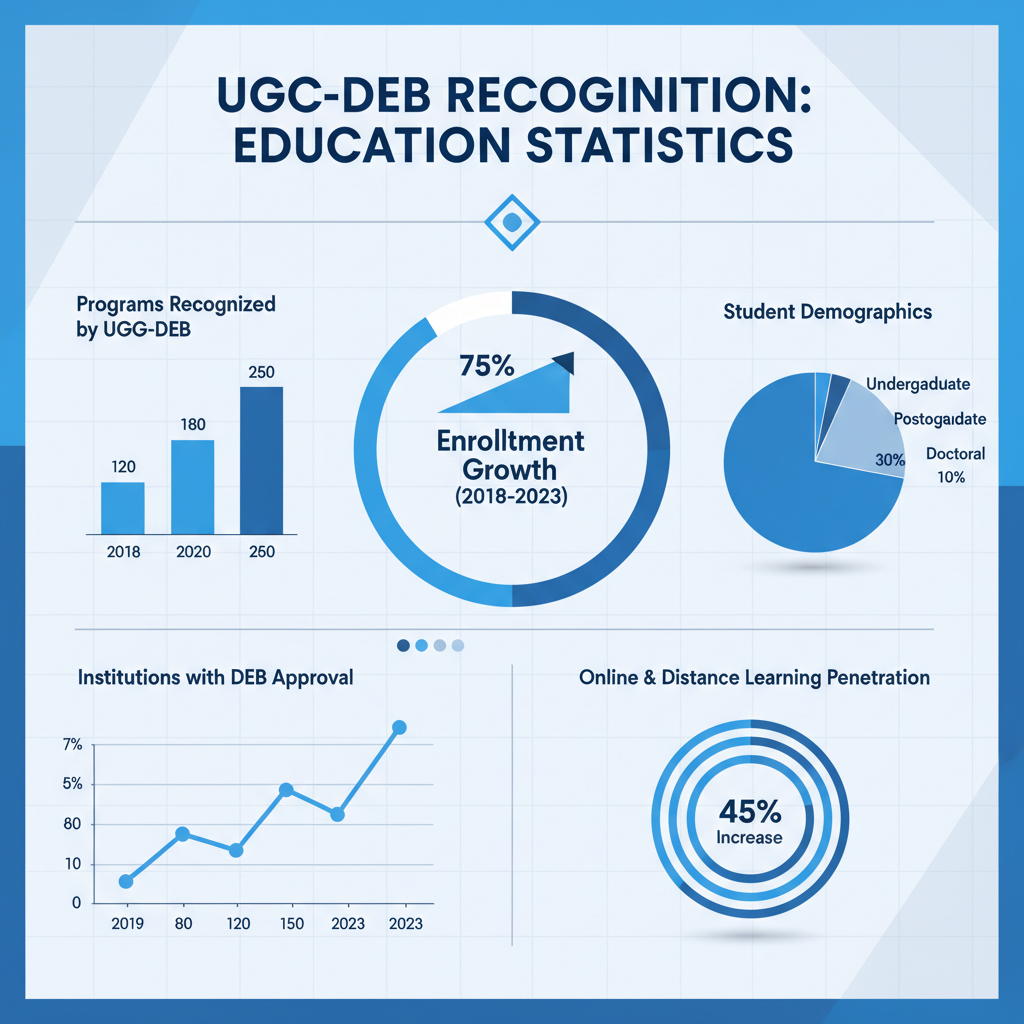
Considering the fee of ₹5,000 for programs like the Integrated BBA + MBA Degree Program at Amity University Online, or even a basic Bachelor of Commerce (B.Com) at ₹3,200, this investment requires due diligence. Use our Education Loan EMI Calculator to plan your finances, but only after confirming the validity of your chosen program.
Common Pitfalls and How to Avoid Them
While the verification process seems straightforward, students often encounter certain challenges. Being aware of these can save you a lot of trouble:
Pitfall 1: Relying Solely on University Claims
Never take a university's word for its accreditation without cross-verification. While most reputable institutions are transparent, it's always best to check the official UGC-DEB portal yourself. Brochures, websites, and even admissions counsellors can sometimes provide outdated or incomplete information. Many universities will state "UGC Approved" but might not specify "UGC-DEB Approved for Online/Distance Learning" for the specific program.
Pitfall 2: Confusing Institutional Recognition with Program-Specific Recognition
A university might be generally recognized by UGC, but its online/distance offerings might require separate or specific DEB approval. For example, a traditional university with DEB approval for an MBA might not have it for a newer MBA with Specialization in Human Resource Analytics in the online mode. Always verify the exact program and mode of delivery.
Pitfall 3: Overlooking the Period of Approval
UGC-DEB recognition is time-bound. A university might have been approved last year, but its approval for the current academic session might be pending renewal or could have been revoked. Always ensure the approval period covers your admission year and expected graduation year. A short delay in renewal doesn't necessarily mean invalidity, but a prolonged absence from the approved list should be a red flag.
Pitfall 4: Neglecting AICTE and NAAC for Technical/Professional Courses
For technical and management programs, particularly those with an AI focus like MCA with specialization in Financial Technology and AI (Fee ₹6,000) or BCA with specialization in Financial Technology and AI (Fee ₹5,500), additional approvals from regulatory bodies like the All India Council for Technical Education (AICTE) might be required, alongside UGC-DEB. While UGC-DEB covers the university's capacity to offer distance education, AICTE approves the technical curriculum. Similarly, NAAC accreditation indicates institutional quality. Check the university's accreditation status on their official websites or the respective regulatory body portals.
⚠️ Avoid This
Do not enroll in any program based solely on offline recognition if you are pursuing an online degree. Online/Distance Education programs have separate regulatory requirements and separate approval periods. Misinterpreting this can lead to an invalid degree.
Avoid This: Do not enroll in any program based solely on offline recognition if you are pursuing an online degree. Online/Distance Education programs have separate regulatory requirements.
The Broader Landscape: Accreditation Beyond DEB ID
While UGC-DEB approval is the cornerstone for online degrees in India, a holistic understanding of institutional credibility involves other accreditations and factors. These additional layers of scrutiny can give you a more complete picture of your chosen university.
NAAC Accreditation
The National Assessment and Accreditation Council (NAAC) assesses and accredits Higher Education Institutions (HEIs) in India. A good NAAC grade (A++, A+, A, etc.) indicates high quality in terms of curriculum, teaching-learning processes, faculty, research, infrastructure, student support, and governance. While separate from DEB for online programs, a university with a strong NAAC grade generally signifies a commitment to academic excellence across all its offerings, including distance learning.
NIRF Ranking
The National Institutional Ranking Framework (NIRF) is a methodology adopted by the Ministry of Education, Government of India, to rank institutions of higher education in India. While NIRF primarily focuses on traditional campus-based education, a high ranking for a university's overall standing can be an indirect indicator of its academic rigor and resources, which may extend to its online divisions. Always look for universities that feature consistently in these rankings. You can compare universities based on various parameters on Parahi.in's comparison tool.
Global Recognition and Industry Partnerships
For students aiming for international careers or specialized fields, look for universities with international collaborations, industry ties, and career services that cater to online students. Programs with strong industry-aligned specializations, such as BBA with Specialization in Data Science or MBA with Dual Specialization, can significantly boost employability. Read Also: Sikkim Manipal University Online Placements : Companies & Reviews.

Checking for Alumni Success and Placements
While DEB ID confirms validity, placement records and alumni success stories provide insight into efficacy. Reputable online universities often publish placement reports and testimonials. Look for information on average salaries, recruiting companies, and career services offered to online students. For instance, our placement statistics & reports hub offers valuable insights.
Online Degree Verification & Application Timeline
The Application Process: Ensuring Your Documents Are Ready
Once you are confident in your university and program's DEB accreditation, the next step is applying. Ensure you have all necessary documents ready. Generally, online degree programs require:
- 10th and 12th-grade mark sheets and certificates
- Bachelor's degree mark sheets and certificate (for PG programs)
- Proof of identity (Aadhar card, Passport)
- Proof of address
- Passport-sized photographs
- Migration certificate (in some cases)
Always check the specific requirements of your chosen university. Remember to check upcoming admission deadlines to avoid missing out. Use our Scholarship Eligibility Checker to see if you qualify for any financial aid, as many universities offer scholarships for online students. Read Also: Scholarships for Online B.Ed Students in India.
ℹ️ Important Info
Always keep soft and hard copies of all your academic documents and the university's DEB approval letter for your reference. These can be crucial during job applications or further study admissions. Check for UGC-DEB approval specific to your admission year.
Important Info: Always keep soft and hard copies of all your academic documents and the university's DEB approval letter for your reference.
Online Course Offerings and Fees at Amity University Online
To provide a tangible example of accredited online education, let's look at some programs offered by Amity University Online, a prominent institution offering a wide array of UGC-DEB approved courses:
This table clearly illustrates a range of programs with varying fees and durations, all from a DEB-recognized institution. It is important to note the "N/A/5" rating for these specific courses, indicating that while they are recognized, individual course ratings may not yet be available or published on Parahi.in.
Ensuring a Future-Proof Online Degree
The digital age has brought unprecedented opportunities for education, but it also demands vigilance from students. Pursuing an online degree is a significant decision that impacts your career trajectory, financial well-being, and personal growth. By meticulously verifying your university's UGC-DEB ID and other accreditations, you are not just ensuring the validity of a piece of paper; you are safeguarding your future.
Remember to leverage resources like Parahi.in's comprehensive guides and tools, such as the Career Guidance Hub and Age Calculator for eligibility checks. Make informed choices, ask critical questions, and always prioritize accredited education. Your diligence today will translate into a recognized and respected qualification tomorrow.
For more insights into online learning and university choices, consider reading our other helpful resources:
- Read Also: Top Online MPH Universities in India
- Know More: Top 10 Online MCA AI Universities in India
- Read Also: NMIMS Online MBA Exam Pattern : Tips & How to Pass
Conclusion: Your Due Diligence, Your Success
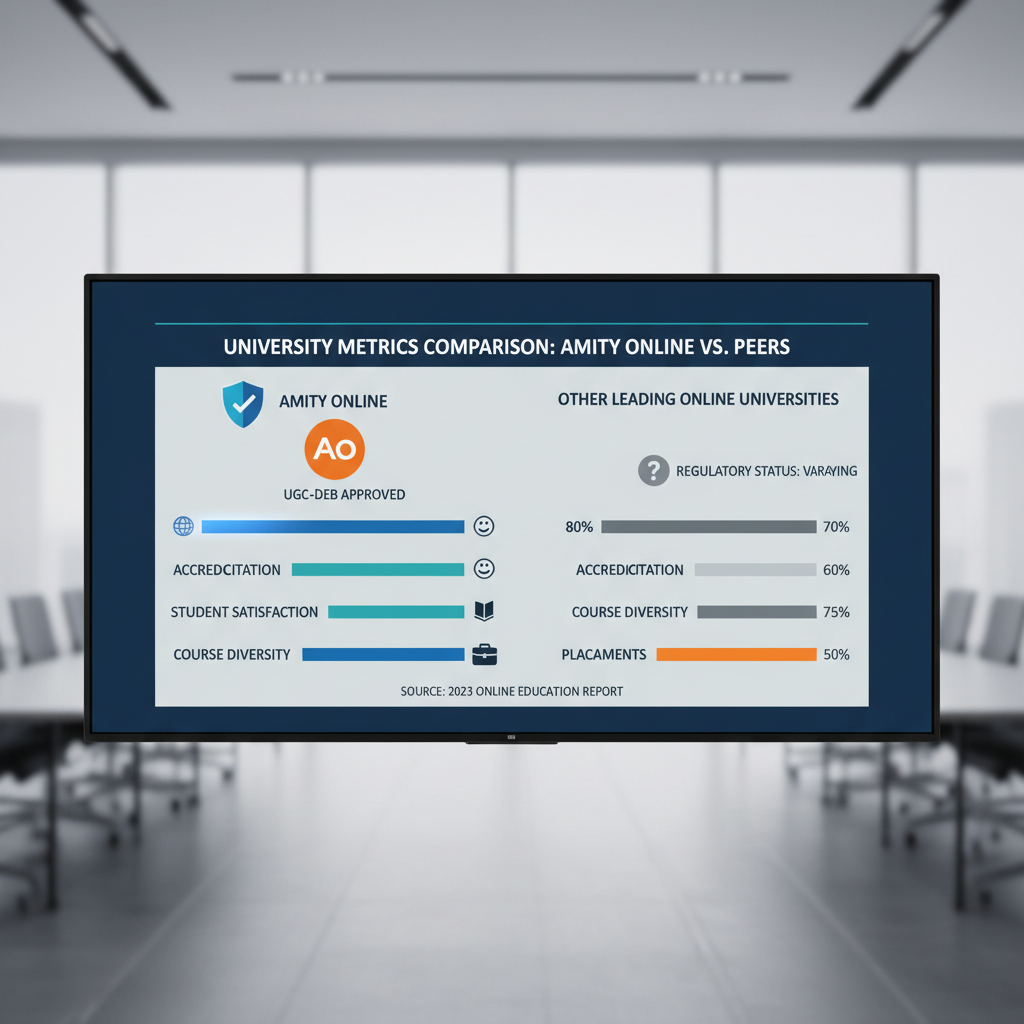
In conclusion, verifying your university's DEB ID is an indispensable step for anyone considering or pursuing an online degree in India. The UGC-DEB approval is the bedrock of legitimacy for distance and online education, guaranteeing that your qualification meets national standards and holds value in the professional and academic spheres.
By following the steps outlined in this guide and staying informed about regulatory updates, you can confidently embark on your online learning journey. Don't compromise on the credibility of your education. Invest your time and money wisely in an accredited program, and pave the way for a successful and fulfilling career. Parahi.in is here to support you at every step of this crucial decision-making process.
📊 Data Sources: Fee structures, placement data, and university details sourced from Parahi.in database, verified against UGC-DEB approved records and official university information. Last updated: March 2026.